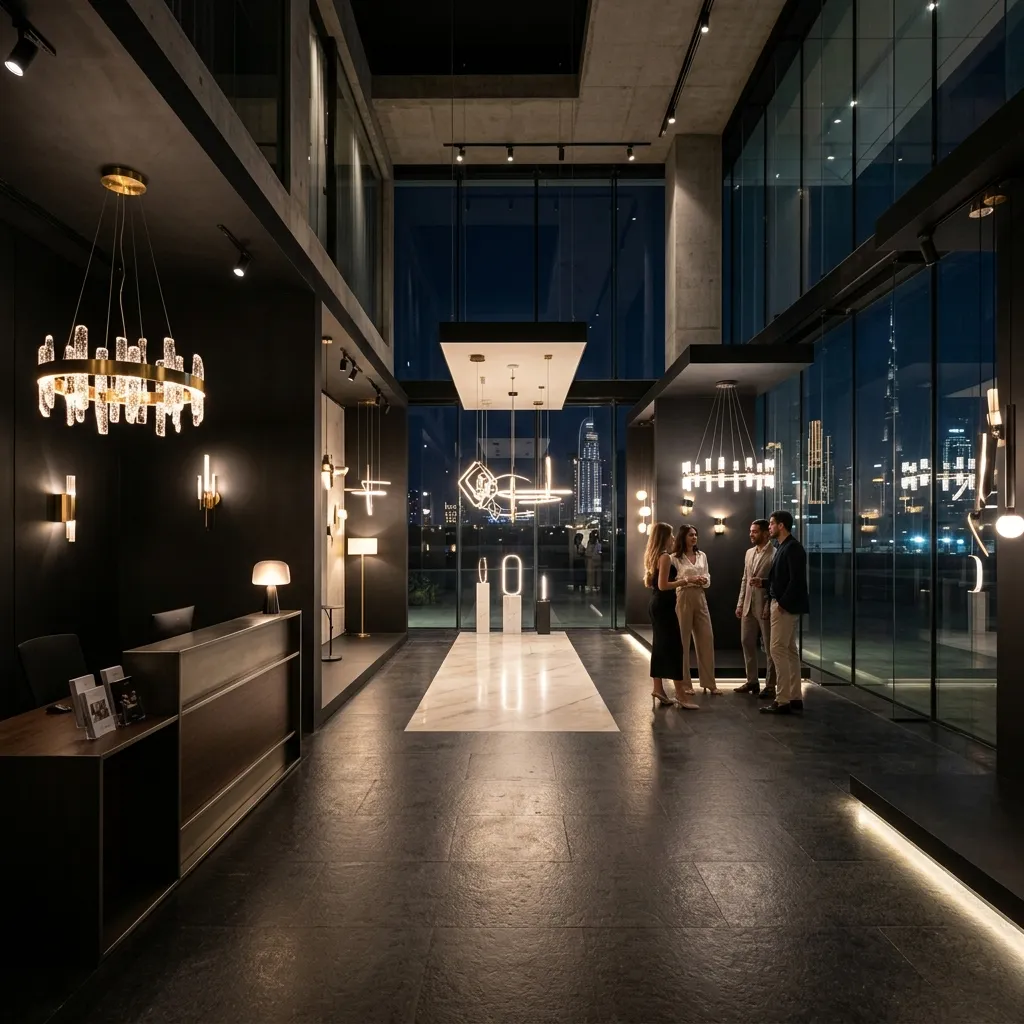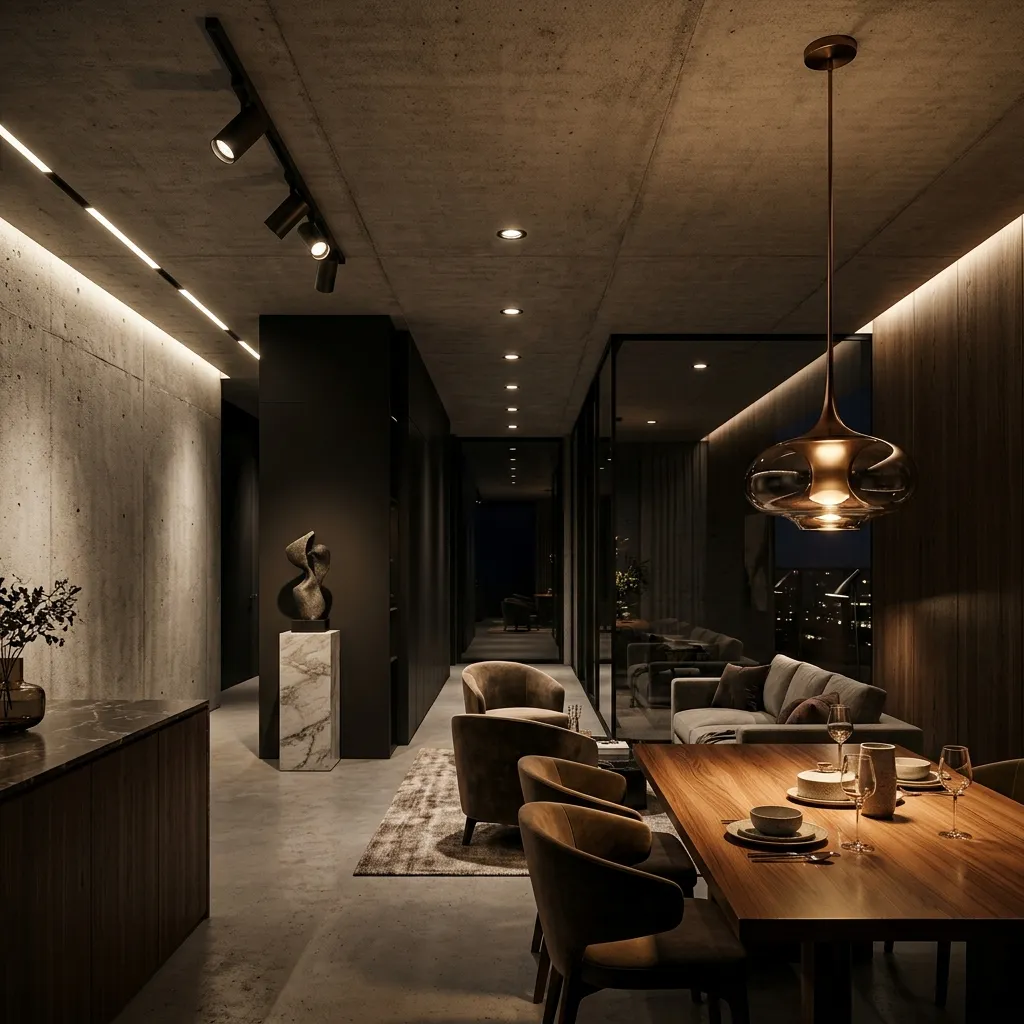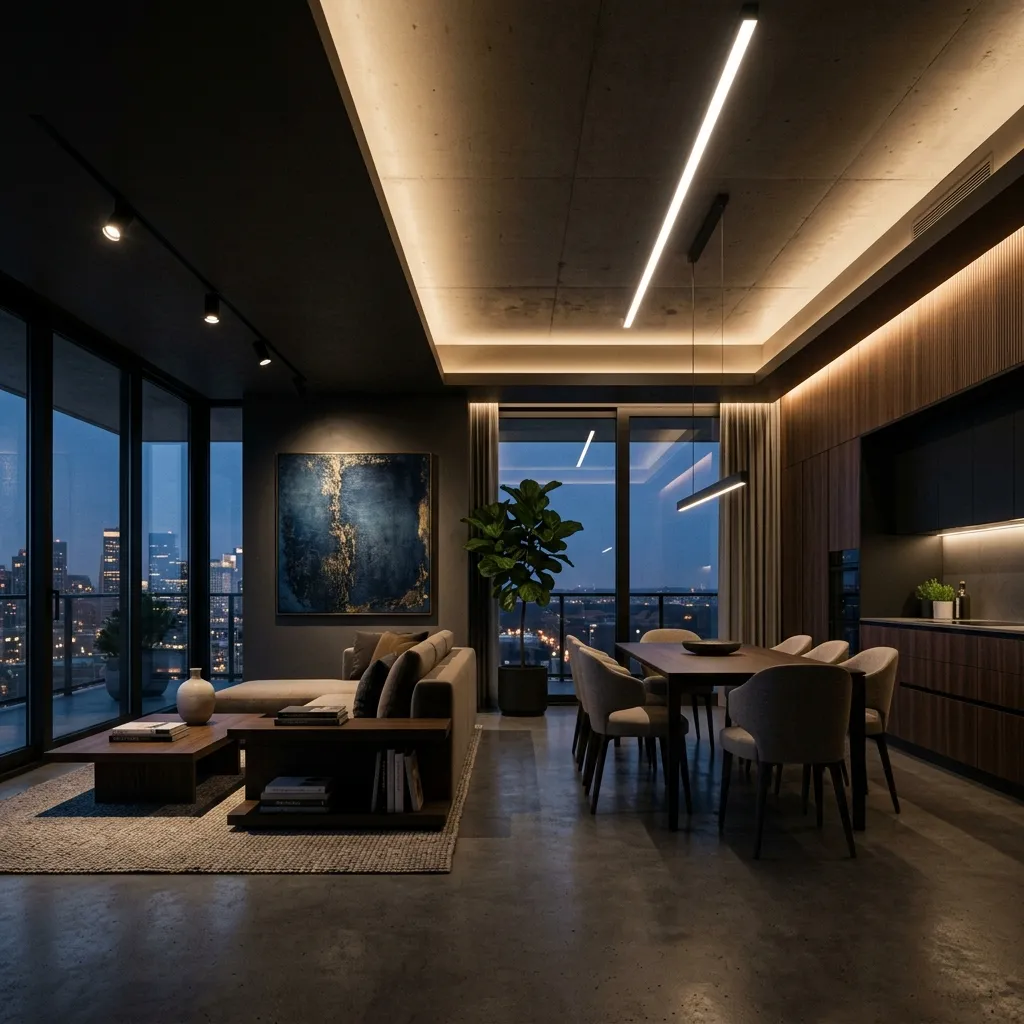
LED ceiling lights have become the standard for both residential and commercial installations. They offer superior energy efficiency, longer lifespans, and better light quality compared to traditional halogen and fluorescent alternatives. But with hundreds of options available, selecting the right LED ceiling light requires a systematic approach.
Step 1: Assess Ceiling Height and Construction
Your ceiling type determines which fixture categories are viable. If you have a suspended ceiling with a void above it, recessed downlights and recessed linear profiles are the cleanest option. For concrete slab ceilings without a void, surface-mounted panels, slim puck lights, or suspended pendants are your best choices.
Ceiling height affects both fixture selection and spacing. Low ceilings (under 2.7 meters) should use flush or recessed fixtures to maximize headroom. Standard ceilings (2.7 to 3.0 meters) can accommodate low-profile pendants. High ceilings (above 3.0 meters) open up dramatic pendant and chandelier options.
Step 2: Determine the Right Light Level
Different rooms need different lux levels. Living rooms typically need 150 to 300 lux, kitchens need 300 to 500 lux, and offices require 300 to 500 lux at desk level. Calculate the total lumens needed by multiplying the room area (in square meters) by the target lux level, then divide by the lumen output of your chosen fixture to determine how many you need.
Step 3: Choose the Right Color Temperature
Color temperature has a dramatic impact on the feel of a space. Warm white (2700K to 3000K) creates a cozy, inviting atmosphere suited to bedrooms, living rooms, and restaurants. Neutral white (4000K) is crisp and clean, ideal for kitchens, bathrooms, and offices. Cool white (5000K to 6500K) feels clinical and is generally reserved for industrial or medical settings.
If you are unsure, consider tunable white LED fixtures that can shift between warm and cool throughout the day. This is particularly valuable in multi-function spaces like open-plan living areas.
Step 4: Specify Dimming Compatibility
Not all LED ceiling lights are dimmable, and those that are may require specific dimmer types. DALI and 0-10V dimmers offer the smoothest dimming curves and are standard in commercial installations. For residential projects, phase-cut (triac) dimmers are more common but require compatible LED drivers. Always confirm dimming compatibility before purchasing.
Step 5: Evaluate Build Quality and CRI
A fixture's Color Rendering Index (CRI) determines how accurately it reveals true colors. For residential and hospitality spaces, insist on CRI 90 or above. For retail environments displaying food, fashion, or art, CRI 95+ is worth the premium. Also check the fixture body material — aluminum dissipates heat far better than plastic, directly affecting LED lifespan.
Need help choosing LED ceiling lights for your project? Visit our ceiling lights Dubai page or contact our team for a personalized recommendation.